
Female Nutrition: from diet culture to strength and hormone health
‘Restriction teaches women to distrust their bodies, yet our bodies are extraordinarily intelligent when they are properly nourished,’ says Leslie Kenny. To better understand what women truly need to thrive nutritionally, we spoke to three leading female longevity experts, including Kenny, about what deserves priority on the plate.
For years, many women have navigated their relationship with food through the lens of diet culture. For those who grew up in the early 2000s, health was rarely framed as something to build. It was something to manage. Two decades on, that narrative is shifting. Science is catching up with what many women have long sensed intuitively: how you fuel your body shapes not only how you look, but how you think, work, recover and age.
Kayla Barnes-Lentz, sometimes described as the ‘Bryan Johnson of female health optimisation’ for her data-driven approach to longevity, puts it plainly: ‘Diet culture encouraged women to always strive to be smaller. If we obsessed over muscle mass and bone density the way we obsess over weight, ageing would look very different. I want women to ask: what will make me strongest, most metabolically healthy, and most resilient, not what will make me the skinniest.’
The data supports her argument. From our early thirties onwards, peak bone mass begins to decline and muscle mass decreases by an estimated three to five per cent per decade. These changes are gradual, often unnoticed, yet highly influential. Nutrition, hormonal balance and metabolic health become increasingly decisive.
To understand what this looks like in practice, we spoke to three leading female longevity specialists: US-based Barnes-Lentz; Leslie Kenny, a former Oxford academic and founder of Oxford Healthspan and the Oxford Longevity Project who we met on a cold Winter day at the Swiss Longevity Day in Zurich; and Dutch health expert Stefanie Klaver, founder of Klaever Health.
Male versus female health and hormones
The first principle of female health is deceptively simple: women are not ‘small men’. Yet for decades, medical and nutritional research focused primarily on male bodies, with findings later applied to women with minimal adjustment. ‘Hormonally, metabolically and neurologically, women are different,’ says Kenny. ‘Oestrogen and progesterone influence how we use glucose, store fat, respond to stress and experience hunger. That makes women far more sensitive to nutritional extremes, particularly during the reproductive years and through perimenopause.’

As a result, practices often framed as discipline – prolonged fasting, chronic calorie restriction and highly intensive training – are frequently poorly tolerated. ‘If a woman fasts too long or exercises excessively, her body may interpret this as an unsafe environment,’ Kenny explains. ‘Ovulation may be suppressed and cycles disrupted. That’s biology protecting itself, not a failure of willpower.’
In her clinical work, she sees many women trying to “fix” hormones in isolation. ‘Hormones operate within a complex system involving the brain, gut, liver, thyroid, adrenals and ovaries,’ she says. ‘If a woman is under-eating, over-exercising or living under chronic stress, no supplement will correct that. Balance begins with feeling safe, nourished and consistent.’
Klaver places this within a broader rhythm. While men largely operate on a stable 24-hour hormonal cycle, women move through continuous monthly and seasonal shifts in energy, digestion and emotional state.
Rather than fixed rules, she argues, women benefit from attunement. Mainstream wellness routines, still shaped by male performance models, often prioritise rigid schedules and standardised diets over responsiveness. ‘Living well as a woman requires space to slow down, listen and adjust,’ Klaver emphasises.
What will make me strongest?
For decades, strength was rarely part of the female health conversation. As briefly touched on earlier, from our thirties onwards, building and maintaining muscle becomes progressively more difficult. Caloric and protein requirements rise during the luteal phase, pregnancy, postpartum and again during perimenopause and menopause, yet many women continue to eat less than their bodies require.
Most specialists now recommend around 1.2 to 1.6 grams of protein per kilogram of body weight per day for active women in their reproductive years, rising to around 1.8 g/kg during perimenopause and menopause. For many, that translates to roughly 75 to 110 grams of protein daily, depending on body size and activity level.
‘Women should be paying far more attention to protein intake,’ says Barnes-Lentz. ‘It supports muscle, bone health and hormone balance as we age.’
Quantity alone, however, is not enough. Timing matters too.
‘Many women function better with protein earlier in the day and regular meals, rather than long fasts followed by large evening meals,’ adds Kenny.
Front-loading protein at breakfast and lunch, rather than postponing most intake until dinner, supports muscle maintenance, appetite regulation and recovery, particularly in hormonally sensitive phases.
Barnes-Lentz also links protein needs directly to life stage. ‘During the luteal phase, pregnancy, postpartum and perimenopause, energy and protein demands increase,’ she says. ‘It becomes harder to build high-quality muscle, which makes consistent intake even more important.’
In this framework, strength is no longer defined by pushing harder. It’s built through eating enough, resting well and allowing the body to recover.
What will improve my bone density?
Bone health is often discussed only after menopause, when fractures and loss of density become visible. In reality, the foundations are laid decades earlier.Peak bone mass is typically reached by the mid-thirties. After that, density gradually declines. Protein, micronutrients, hormones and mechanical load through strength training all play critical roles in preserving skeletal strength.

Iron deficiency remains widespread. Studies suggest that up to 40 per cent of menstruating women are iron deficient, largely due to monthly blood loss combined with insufficient intake. Vitamin D insufficiency affects more than half of European adults.
‘Women have higher micronutrient needs relative to body size,’ Barnes-Lentz explains. ‘Especially iron, omega-3s and B vitamins.’
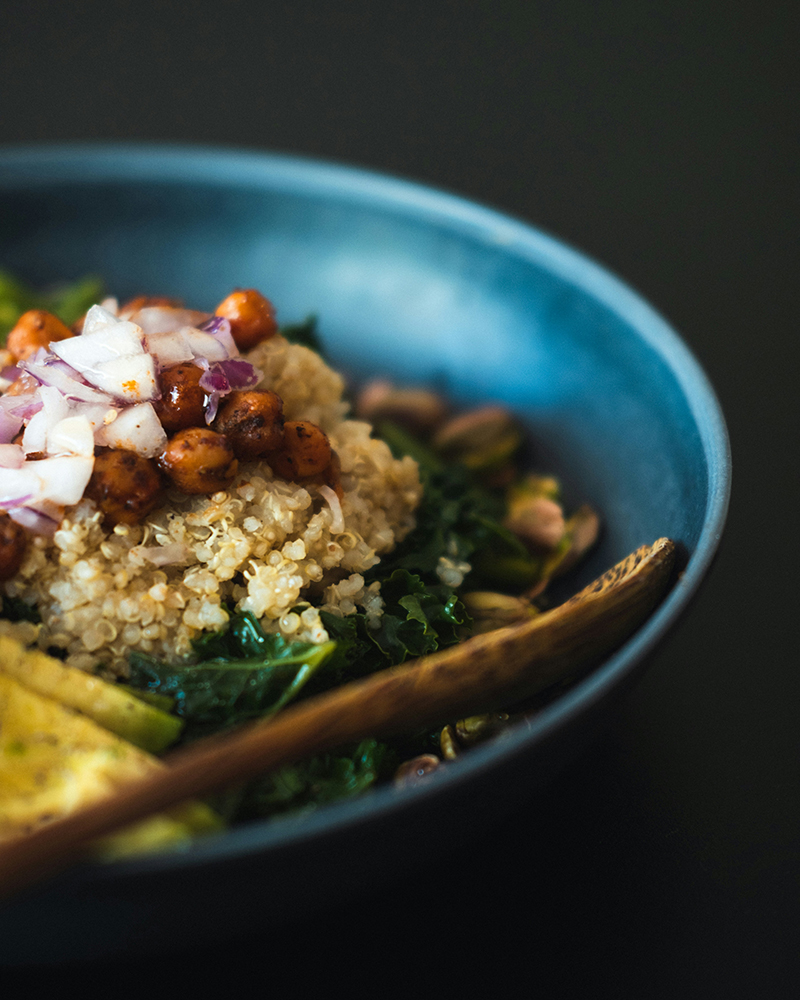
In practice, this translates into prioritising iron-rich and mineral-dense foods such as lentils, chickpeas, eggs, sardines, oysters, leafy greens and grass-fed meat, alongside vitamin D sources like oily fish, eggs and fortified dairy or plant milks. Calcium-rich options, including yoghurt, kefir, tahini, almonds and small-boned fish, further support skeletal strength.
Kenny adds that thyroid function is often overlooked. ‘Many women are told their thyroid is “normal” based on limited markers, while they still experience fatigue, hair loss and cold sensitivity,’ she says. ‘That has consequences for bone and metabolic health.’ For sustained energy and tissue repair, many clinicians consider ferritin levels above 50 µg/L a more meaningful benchmark than the lower reference ranges often used in routine testing.
Klaver emphasises seasonal and cyclical nutrition. During menstruation, for instance, she encourages iron-rich, warming meals such as slow-cooked stews, bone broth, lentil soups and gently spiced vegetable dishes. ‘The body’s needs shift throughout the month,’ she says. ‘Bone and tissue health depend on responding to those rhythms.’ She also points to the importance of pairing minerals with good absorption: combining iron-rich foods with vitamin C from citrus, berries or fermented vegetables, while avoiding excessive coffee or tea around meals.
Bone density, in this sense, is not maintained through supplements alone. It reflects years of consistent nourishment, hormonal stability, intelligent movement and attention to how food is absorbed.
What will make me most metabolically healthy?
Metabolic health in women is shaped by more than hormones alone. The gut and the brain play an equally important role. Women have a highly responsive stress system and a stronger gut–brain connection, which makes them more sensitive to irregular eating, chronic stress and nutritional shortcuts. Habits such as starting the day with only coffee, skipping meals or consistently eating too little can quickly translate into fatigue, mood swings and intense cravings.
As Kenny explains: ‘Protein provides amino acids needed for neurotransmitters such as serotonin and dopamine. Omega-3 fats support brain structure. Iron and vitamin B12 are crucial for energy and mood, while selenium and iodine support thyroid function and circulation. A healthy gut microbiome helps regulate inflammation and emotional balance.’
Across all three experts, the message is consistent: metabolic resilience is built through regular meals, sufficient protein, enough carbohydrates to support serotonin production, and stable blood sugar.
Kenny emphasises that this stability is created through preparation rather than willpower. A key strategy, she says, is identifying personal ‘kryptonite’: the foods or situations that tend to derail energy levels, and planning supportive alternatives in advance. When an afternoon dip hits, she suggests choosing options that combine satisfaction with nourishment: a few squares of dark chocolate after a protein-rich meal; chia pudding with high-protein yoghurt, berries and cinnamon; or apple slices with nut butter and cacao nibs. Salty cravings, which can indicate mineral depletion, are often better met with hummus and crudités, olives with cheese, or roasted chickpeas.
‘Nutrition should feel supportive, not punitive,’ Kenny says. ‘When women eat enough protein, micronutrients, fibre and healthy fats, appetite regulation improves naturally. Willpower becomes far less relevant when the body is properly fueled.’